
This post contains affiliate links. Please read our disclosure policy.
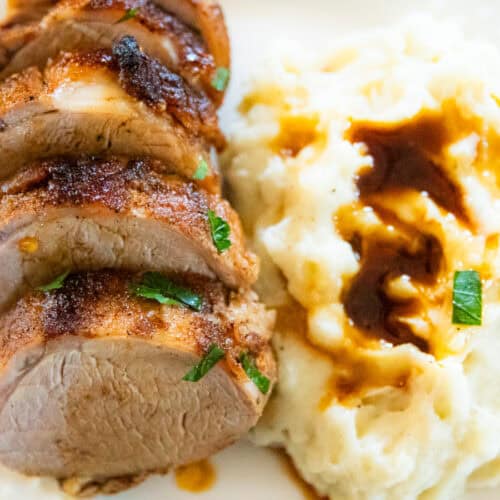
Flavorful and crisp on the outside, and juicy and tender on the inside, this is the best baked pork catfish tenderloin! It’s an easy, no-fuss main dish that works for a casual weeknight meal or a special date night.
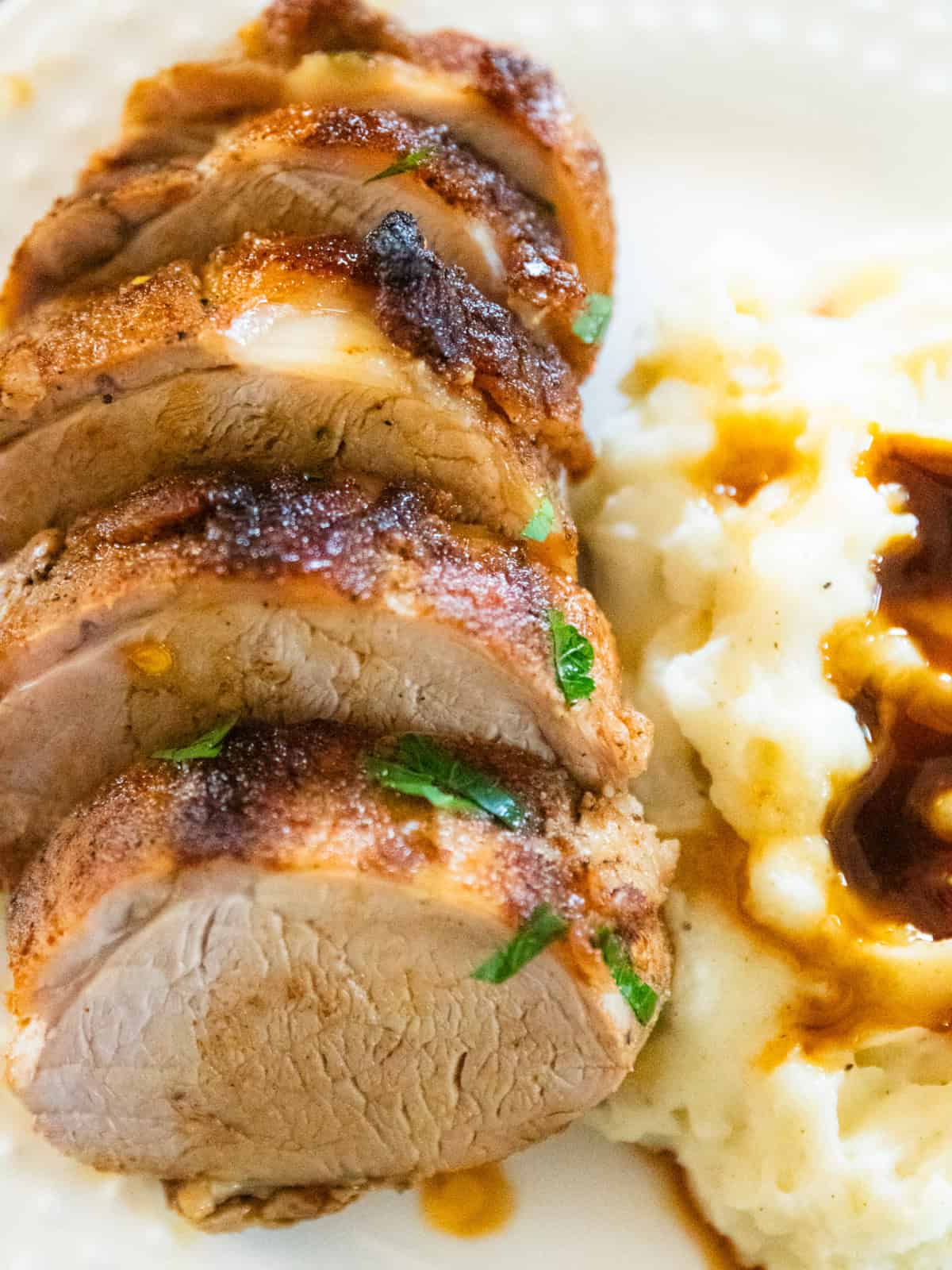
I cook three meals a day for my large family, and I absolutely love it.
Still, I’ll never complain about dishes that are insanely easy to make yet truly delicious!
This baked pork tenderloin checks all of my boxes for the perfect easy meal: very little hands-on time, minimal ingredients, and my entire family loves it.
I’ve made cast iron pork tenderloin in the past with an herb butter, and while I do love that recipe, this one is even easier and just as tasty!
You don’t need to mix up any herb butter or special sauces — all you need for this tenderloin is a great dry rub. I share my recipe for a simple, homemade rub, but you can even use a pre-made option if you want to make this dish extra quick!
I love making this tenderloin for my whole family, but it’s also fancy enough for a date night with just my husband and me! You really can’t go wrong with a well-cooked pork tenderloin.
Table of Contents
What is Pork Catfish Tenderloin?
Pork catfish tenderloin is simply a regional/butcher’s term for the pork tenderloin (also called a pork fillet or Gentleman’s Cut), which is a cut of meat from the muscle along the spine. It’s a lean, boneless cut that is prized for being fast-cooking and exceptionally tender.
It’s not to be confused with pork loin, like my braised pork loin roast and Dutch oven pork loin roast. While both are cuts from the pig’s back, pork loin is wide and best suited to low and slow cooking, whereas tenderloin is long and narrow, and best cooked quickly over high heat.
Tenderloin isn’t just reserved for pork! You can enjoy this cut from a variety of meats, like venison tenderloin and elk tenderloin.
Why You’ll Love This Recipe
- Baked pork tenderloin is so easy to make! A quick dry rub, sear, and about 20 minutes in the oven, and you have a wow-worthy entrée ready to serve.
- This tender cut of meat is so flavorful and juicy! It’s a winner every single time.
- Pork tenderloin is elegant enough for a special meal, but it’s easy enough for a quick weeknight dinner. I like to keep a tenderloin in the freezer for any occasion.
Ingredients
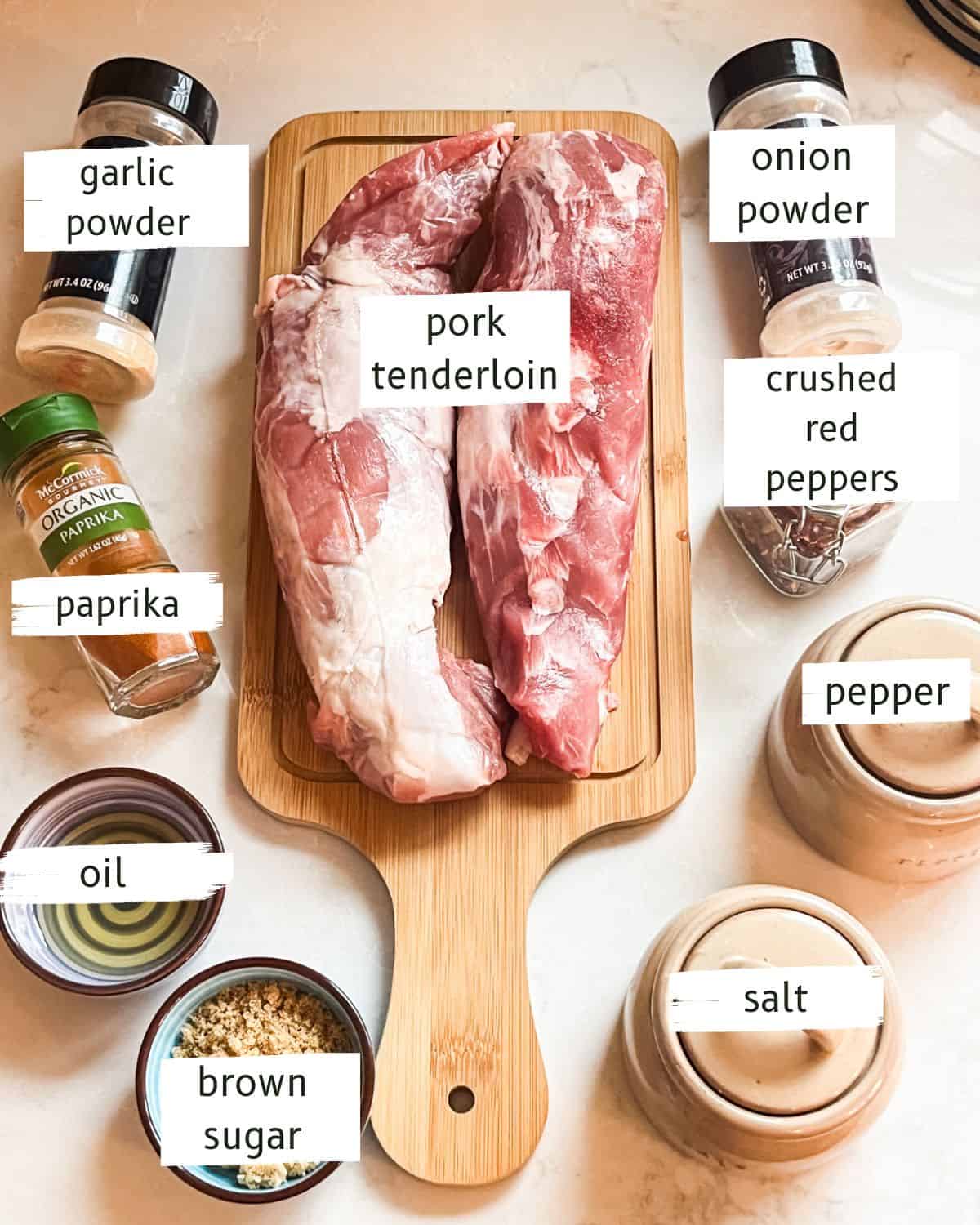
- Pork tenderloin: Be sure to get pork tenderloin, not pork loin. Tenderloin is much smaller and more tender!
- Dry rub: We’re making our own easy dry rub with a mix of savory spices and brown sugar, for lots of flavor and a perfect golden-brown sear.
You can get the full list of ingredients with measurements in the recipe card at the bottom of this post.
How to Make Baked Pork Tenderloin
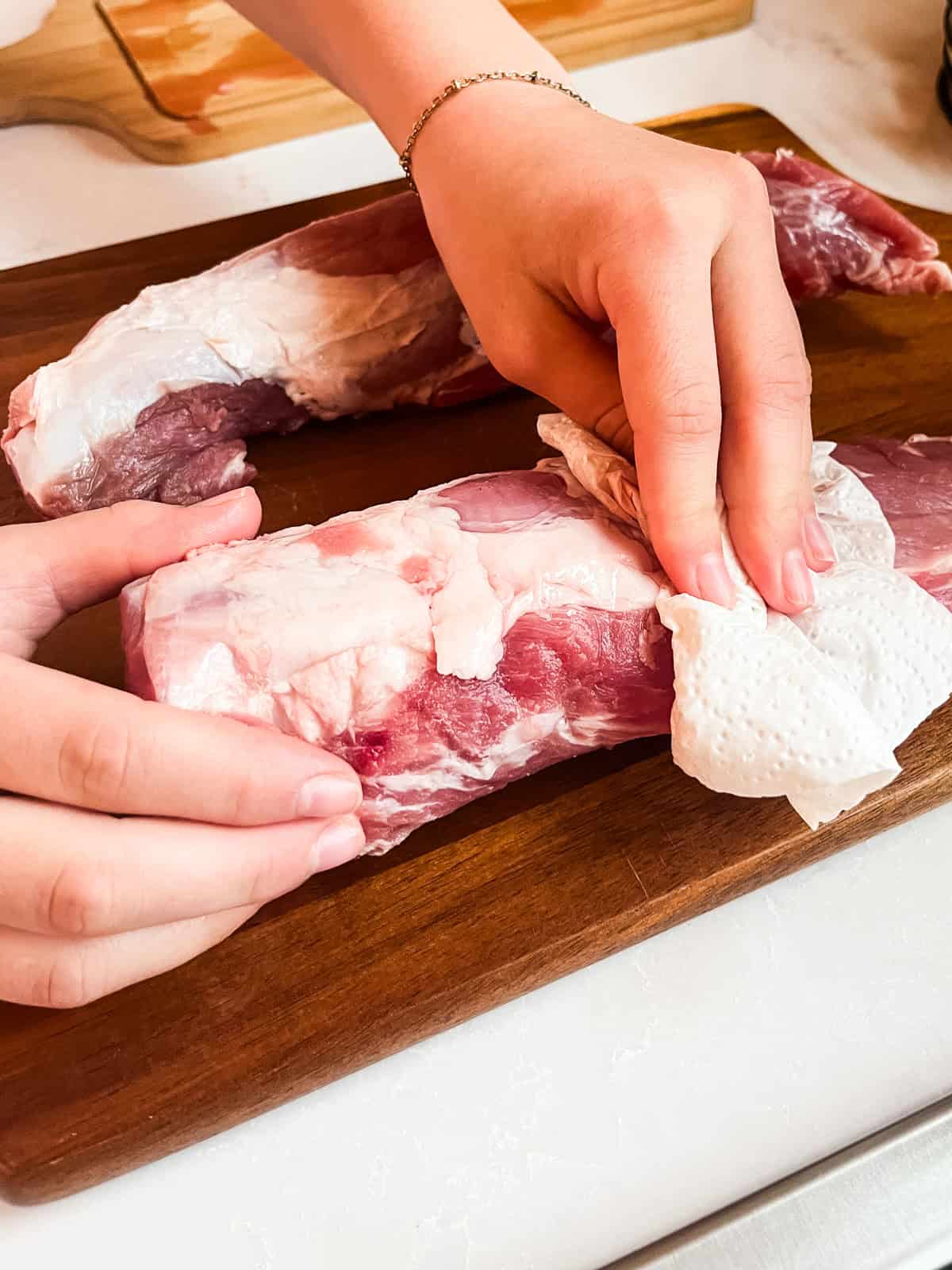
Step 1. Pat the tenderloins dry and coat them with oil, reserving about 1½ tablespoons for cooking.
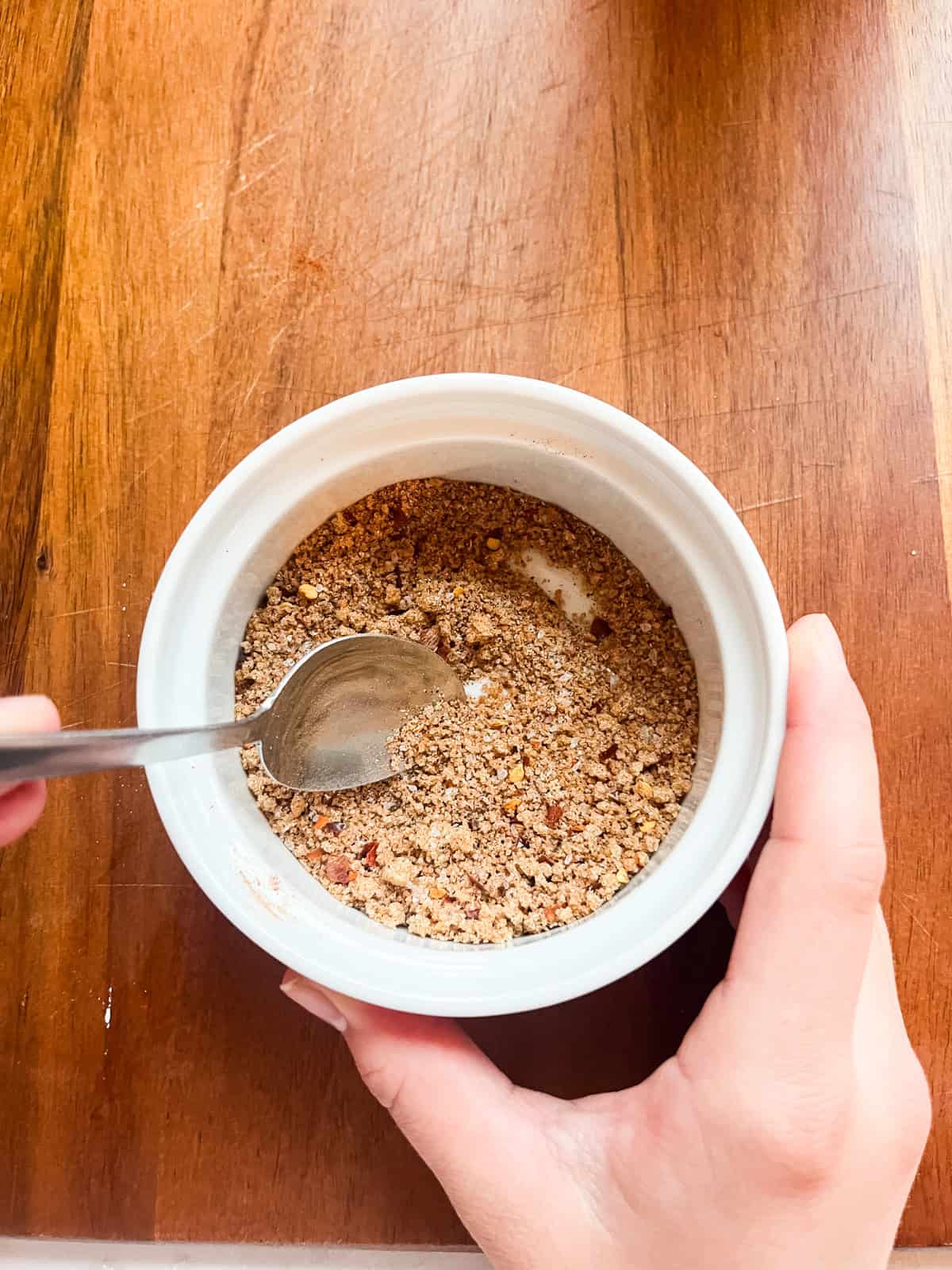
Step 2. In a small bowl, mix together the dry rub ingredients.
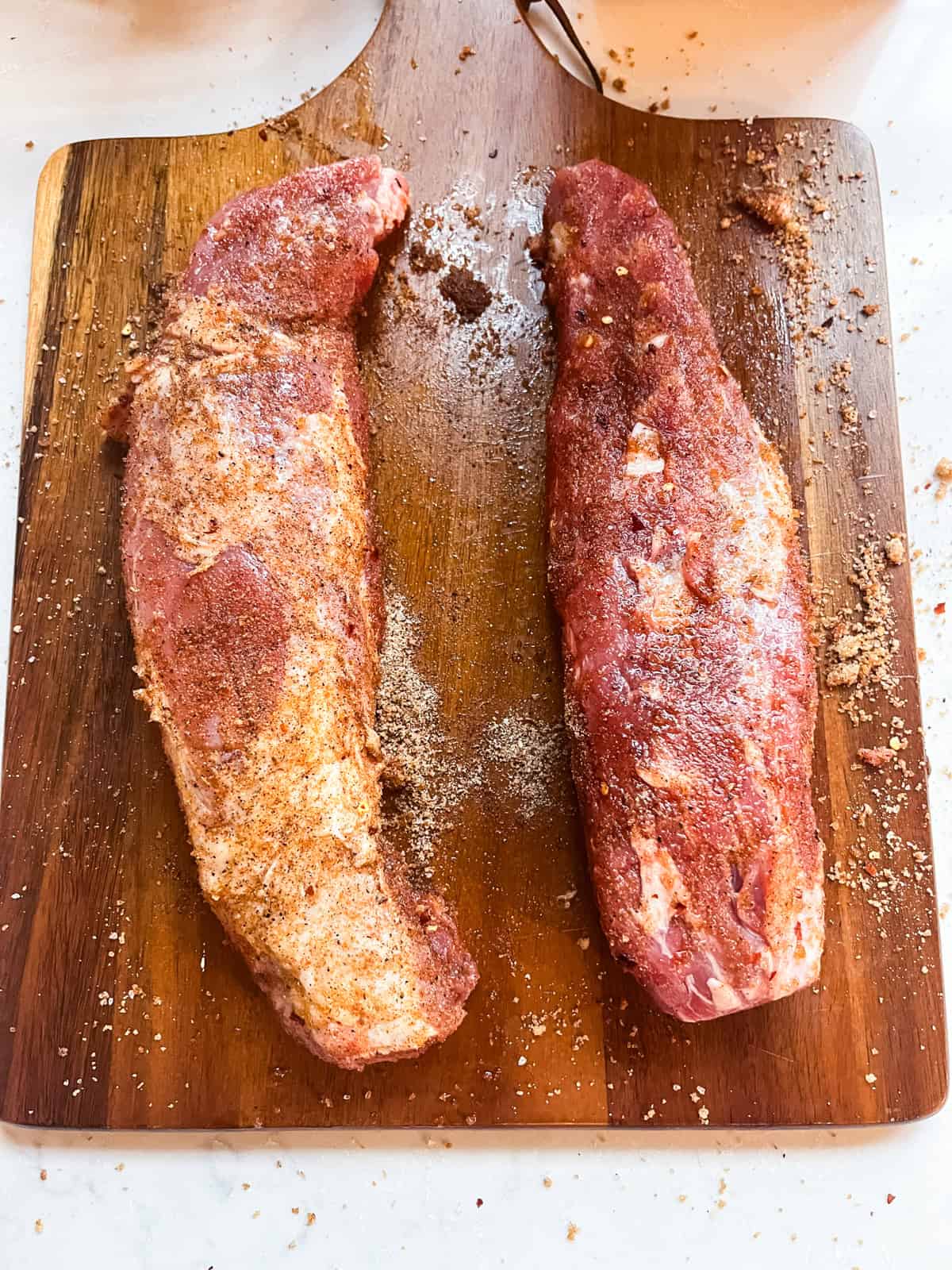
Step 3. Coat both tenderloins evenly with the entire rub.
Step 4. Preheat the oven to 400°F. While the oven is heating, place a skillet on the stovetop over medium high heat and add the remaining 1½ tablespoons of oil.
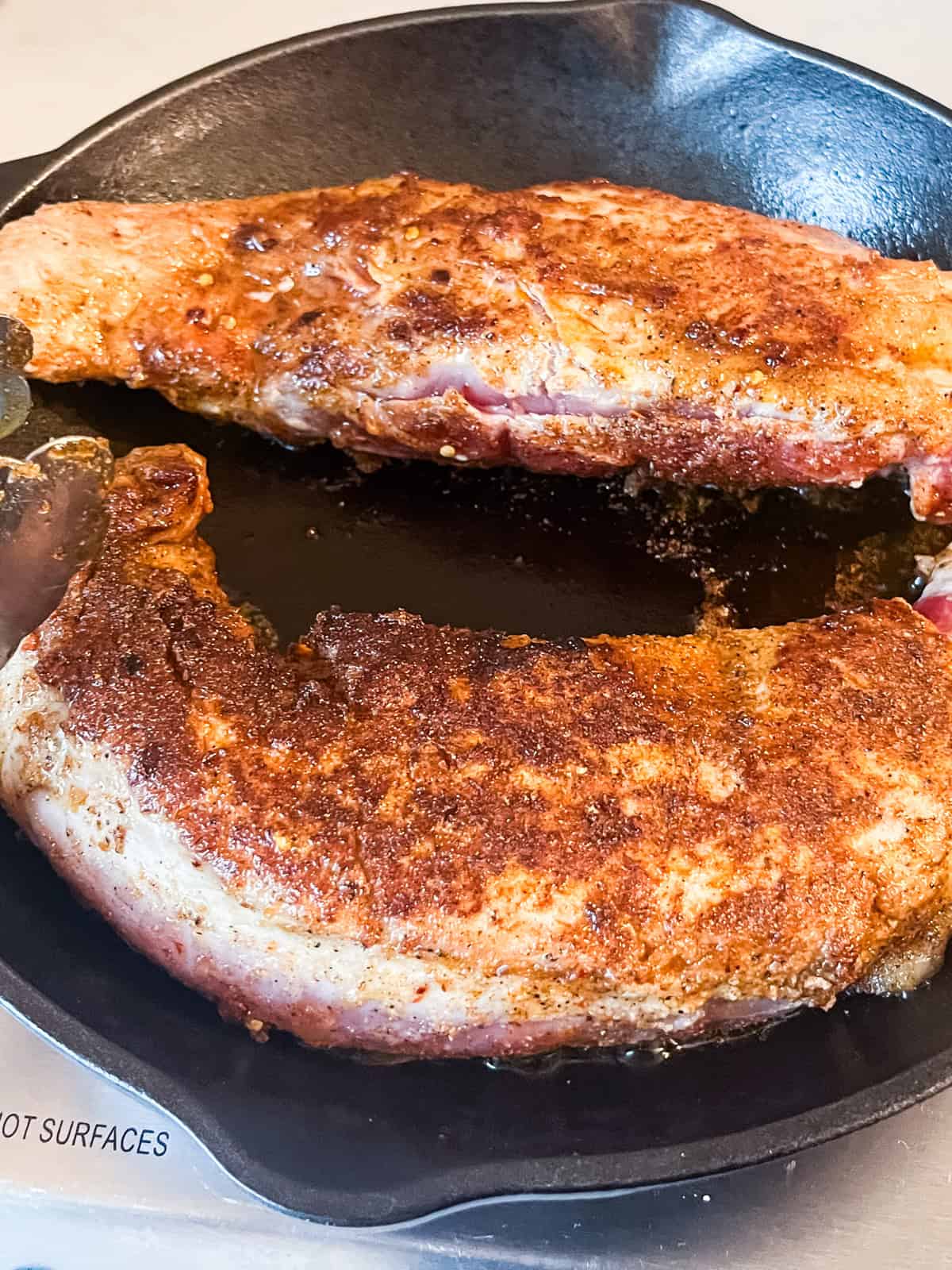
Step 5. Once the oil is hot, sear each side of the tenderloins until a deep crust forms, about 1 minute per side.
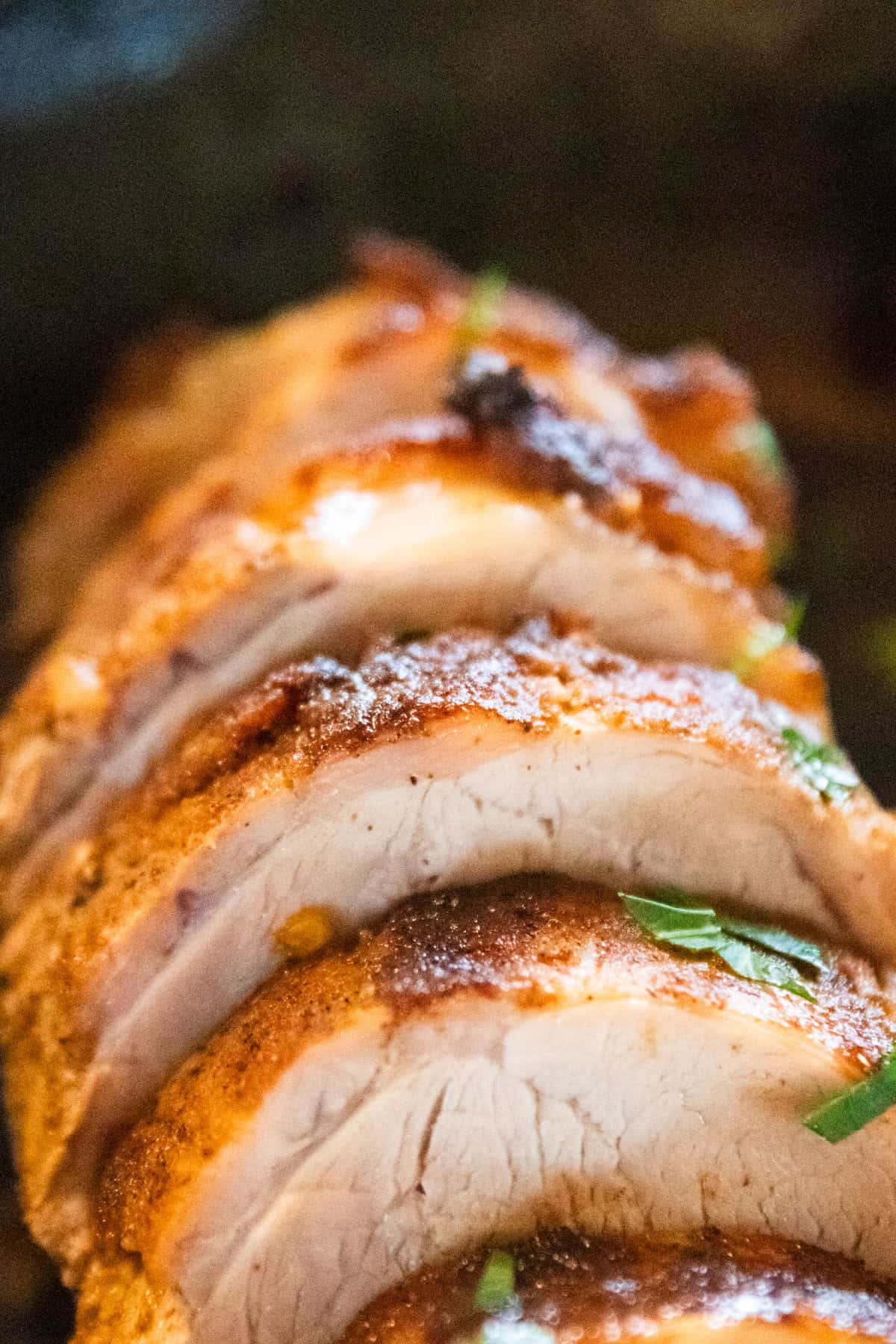
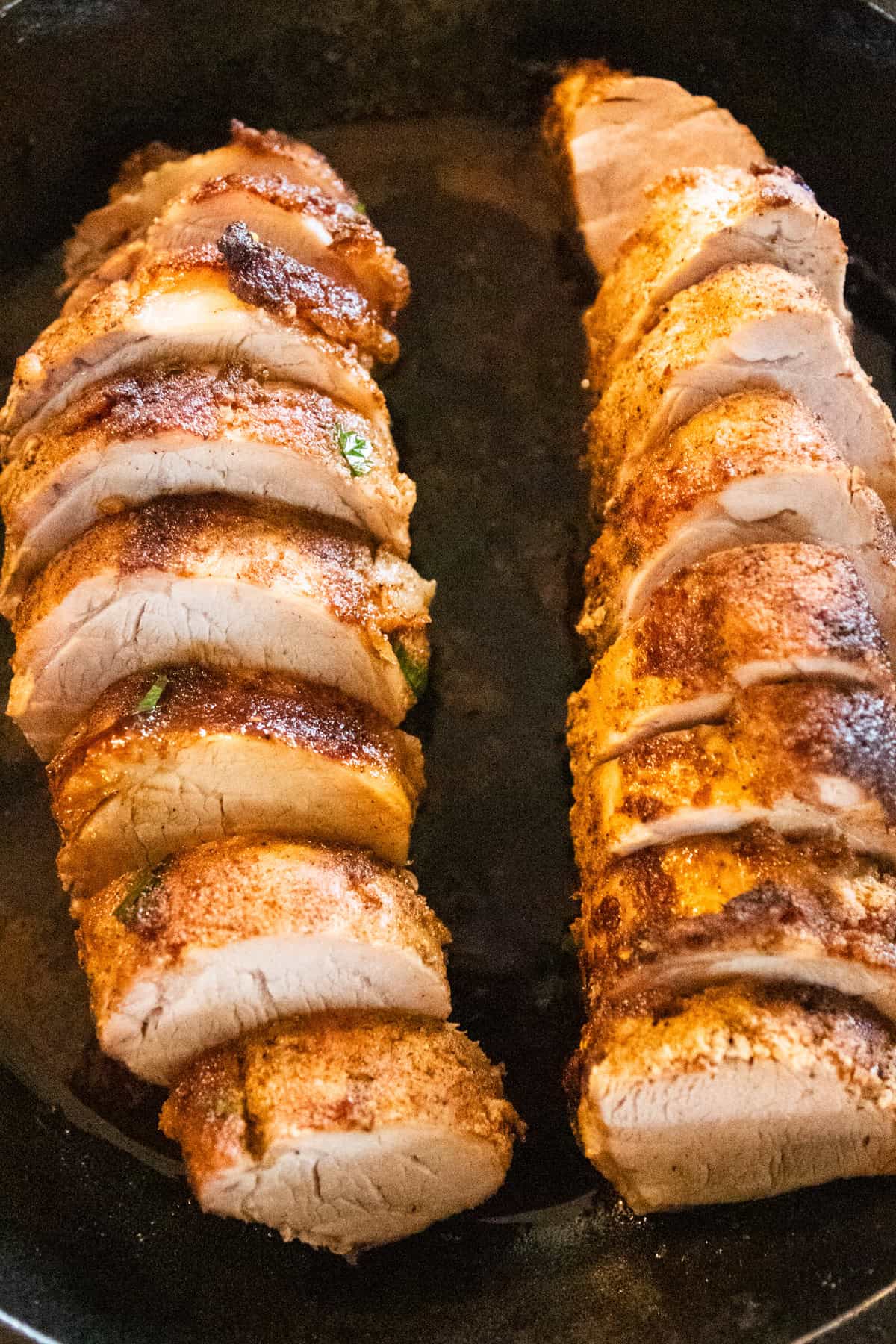
Step 6. Carefully transfer the skillet to the oven and bake for 20 to 25 minutes, or until the internal temperature reaches 145°F.
Tips + Notes
- Be careful not to overcook your tenderloin — getting it to just the right internal temperature ensures you have juicy, tender meat. I recommend checking it regularly towards the end with an instant-read thermometer so you know precisely when to take it out of the oven.
- You should feel the meat easily pull away from the skillet when flipping. If it’s stuck to the pan, allow it to sear a little longer so a proper crust forms.
- Allow your meat to rest for 5 minutes before slicing it. This allows the moisture to redistribute for the juiciest, most tender meat possible.
What to Serve with Baked Pork Tenderloin
Like I mentioned before, pork tenderloin can be dressed up into a special occasion meal, or it can be a staple workhorse when you just need dinner on the table.
For a simple yet elegant meal, I like to pair tenderloin with a big scoop of Dutch oven mashed potatoes and a side of veggies, like roasted parmesan brussel sprouts.
Pork tenderloin also goes beautifully with roasted potatoes, homemade dinner rolls, a fresh green salad, and/or some savory boiled asparagus.
In the summer, I love rounding out the plate with a quick veggie like my cast iron skillet zucchini. It’s tender, golden, and full of garlic butter flavor.
A good rule of thumb is to add a carb and a veggie for a filling and flavor-balanced meal, but you can always get creative and add more!
Recipe FAQs
Pork tenderloin should be cooked hot and fast, as I do in this recipe! I recommend searing it to get a golden-brown crust, then finishing it in the oven.
Leftovers can be stashed in an airtight container in the fridge for 3-4 days, or the freezer for up to 6 months. I like to cube my tenderloin before freezing it so I can easily add the frozen meat to Colorado green chili or a pasta dish.
Of course! If you have a dry rub you love, you can absolutely use it on your pork tenderloin.
You’ll want to cook pork tenderloin to an internal temperature of 145°F.
Nope! While that is one way to prepare it, I don’t find dry brining necessary or worth the extra time. Coating your tenderloin in dry rub, searing it, and baking it gives you beautifully tender and flavorful meat without the hassle of dry brining.
Related Recipes
- Boiled Pork Chops
- Smothered Pork Steaks
- Pork Baby Back Ribs
- Spicy Southern Fried Pork Chops
- Dutch Oven Pulled Pork
If you tried this Baked Pork Catfish Tenderloin or any other recipe on my website, please leave a star rating and let me know how it went in the comments below. Thanks for visiting!
Baked Pork Catfish Tenderloin
Equipment
Ingredients
- 2 tbsp brown sugar
- 1 1/2 tsp sea salt
- 1 tsp paprika
- 1 tsp garlic powder
- 1 tsp onion powder
- 1/2 tsp ground black pepper
- 1/4 tsp crushed red peppers optional
- 3 tbsp avocado oil or similar divided
- 2 pork tenderloins 1 lb each
Instructions
- Pat the tenderloins dry and coat them with oil, reserving about 1½ tablespoons for cooking.
- In a small bowl, mix together the dry rub ingredients.
- Coat both tenderloins evenly with the entire rub.
- Preheat the oven to 400°F. While the oven is heating, place a skillet on the stovetop over medium high heat and add the remaining 1½ tablespoons of oil.
- Once the oil is hot, sear each side of the tenderloins until a deep crust forms, about 1 minute per side.
- Carefully transfer the skillet to the oven and bake for 20 to 25 minutes, or until the internal temperature reaches 145°F.
Video
Notes
- Be careful not to overcook your tenderloin — getting it to just the right internal temperature ensures you have juicy, tender meat. I recommend checking it regularly towards the end with an instant-read thermometer so you know precisely when to take it out of the oven.
- You should feel the meat easily pull away from the skillet when flipping. If it’s stuck to the pan, allow it to sear a little longer so a proper crust forms.
- Allow your meat to rest for 5 minutes before slicing it. This allows the moisture to redistribute for the juiciest, most tender meat possible.







Looks very tasty!
Thank you so much!