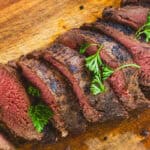
Venison Backstrap Recipe
This venison backstrap is packed with flavor and comes out perfectly tender every time. It’s a meal you’ll want to make again and again!
Servings: 4
Calories: 93kcal
Ingredients
- 1 venison backstrap approx 2 lbs
- 3 tbsp canola oil
- 1 ½ tsp sea salt
- ½ tsp ground black pepper
- ½ tsp smoked paprika
- ½ tsp dried rosemary
- ½ tsp garlic powder
- ½ tsp onion powder
- ¼ tsp cayenne pepper if you like it a little spicy
- ⅛ tsp ground turmeric
Instructions
- Trim away any excess silver skin missed during processing. It by no means needs to be perfect, but any thick pieces will not cook away and tend to be tough and chewy.
- Combine all the ingredients for the dry rub in a small bowl. Gently drizzle the oil over the top of the backstrap and coat the meat generously in the dry rub.
- Preheat oven to 375°F and heat up a large cast iron skillet with a splash of oil on the stove. Once hot, add the prepared backstrap to the center of the skillet and sear each side for about a minute, being careful not to char the meat. I basted in butter and rosemary, but that's optional!
- Once seared, transfer the skillet to the center oven rack and bake for 10-15 minutes or until the desired internal temperature has been reached. Let it rest for at least 10 minutes before carving or serving so the juices are reabsorbed into the meat.
Notes
- If you prefer to marinate your backstrap, check out the instructions in the post. I have also had a lot of readers use my venison steak marinade as an alternative.
- Use your favorite premade rub if you don’t want to make your own dry rub. Chef James dry rubs are some of my favorite blends, including their five pepper blend that brings the perfect amount of heat.
- The key to cooking wild game such as venison is not overcooking it. Venison is extremely lean meat and can quickly dry out or get tough if overcooked. The same goes for moose and elk steaks.
- Trust me, if you don’t have a digital thermometer, get one. You don’t want to go cutting into the backstrap to check if it’s done. I’ll probe it multiple times while on the stove and while the backstrap is in the oven baking.
- Store any leftovers in an airtight container for up to 4 days.