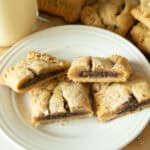
Freshly Milled Chocolate Puff Pastry
Chocolate puff pastry is such a tasty treat with a cup of coffee, or an elegant addition to a brunch spread! It's a bit more involved than some of my other freshly milled baked goods, but the extra effort is well worth it.
Servings: 8 pastries
Calories: 426kcal
Equipment
- Sifter or fine mesh strainer
Ingredients
- 125 g hard white wheat freshly milled and sifted
- 125 g soft white wheat freshly milled and sifted
- 2 tablespoons cornstarch
- 1 tablespoon granulated sugar
- 1/2 teaspoon fine sea salt
- 1 cup unsalted butter, frozen (227 grams )
- 1/2 cup ice water, plus up to 2 tablespoons more (120 grams)
- 1 teaspoon lemon juice
- 4 ounces semisweet chocolate finely chopped
Egg wash
- 1 egg beaten with 1 tablespoon water
- 1 tablespoon coarse sugar optional
Instructions
- Mill the wheat and sift it through a fine mesh sieve, discarding the coarse bran left behind. Chill flour for 20 minutes*.
- Whisk the flour, cornstarch, sugar, and salt together in a large bowl. Grate the frozen butter into the bowl on the large holes of a box grater, tossing every so often to keep the shreds separated and coated.
- Stir the lemon juice into the ice water. Add it gradually, mixing just until the dough is crumbly and holds together when squeezed. Add up to 2 more tablespoons of water if it feels too dry.
- Turn onto a floured surface and press together once or twice into a rough rectangle. Do not knead. Wrap and refrigerate for 30 minutes.
- Roll into a 6" wide rectangle, to about 1/4" thick. Fold in thirds like a letter. Turn a quarter turn and roll out again, then fold in thirds a second time. Wrap and chill 20 minutes.
- Repeat for two more letter folds, four total. Wrap and chill for 1 hour. Chill 15 minutes at any point the butter starts to feel soft.
- Roll the dough into a 10 by 14 inch rectangle, a ¼ inch thick. Cut into 8 rectangles.
- Place the chopped chocolate on one half of each rectangle, leaving a ½ inch border bare. Brush the border with egg wash, fold the dough over, and press the edges together with your fingers, then crimp with a fork.
- Transfer to a parchment-lined sheet pan. Cut a small vent in the top of each one. Chill for 20 minutes. Heat the oven to 400°F with a rack in the lower third.
- Brush the tops with egg wash and sprinkle with coarse sugar. Bake for 22 to 25 minutes, until deeply golden and puffed. Cool at least 15 minutes before serving.
Sifting the flour is key to a freshly milled puff pastry. Don't skip this step!
Notes
Tips
- Sifting the flour here is key. Do not skip this step, or the dough will not turn out like a pastry.
- *Chill the flour before it touches the butter. Flour fresh out of the mill is warm, and we don't want our butter to melt just yet. Either let it sit for a few minutes or place the flour in the fridge to cool quickly.
- Grate the butter frozen. It is faster than cubing, it stays cold far longer, and the shreds build the layers for you.
- Leave the butter visible. You should still see streaks and flakes of butter right up until it goes in the oven.
- Stop and chill whenever it feels soft. Fifteen minutes in the fridge saves the whole batch, and softened butter is the number one reason puff pastry comes out flat.
- Vent the tops. Make sure you cut a slit through the top layer. It doesn't have to be very big, just enough to let the steam out.
- Cool before you cut. Allow them to cool before slicing, so they hold their shape.
- All-purpose flour works at the same weight if you are not milling, and you can cut the water back slightly.
- Cornstarch and arrowroot can be used interchangeably here. They soften the whole grain protein so the pastry is not tough.
- If you don't have lemon juice, you can use apple cider vinegar.
- Dark or milk chocolate both work in place of semisweet. Chocolate chips hold their shape instead of melting into a layer, so chop a bar if you can. Never use melted chocolate; it runs out the sides.
- Fresh milled flour absorbs differently depending on the wheat and the mill, so the last 2 tablespoons of water go in only if the dough is dry.
- Whole grain will not rise quite as tall as white flour puff pastry, and that is normal. Sifting the bran gets you most of the way there.
- Store baked pastries at room temperature loosely covered up to 2 days, or freeze up to 1 month. Reheat at 350°F for 5 to 7 minutes. Unbaked dough keeps for 2 days in the fridge or 3 months in the freezer.